

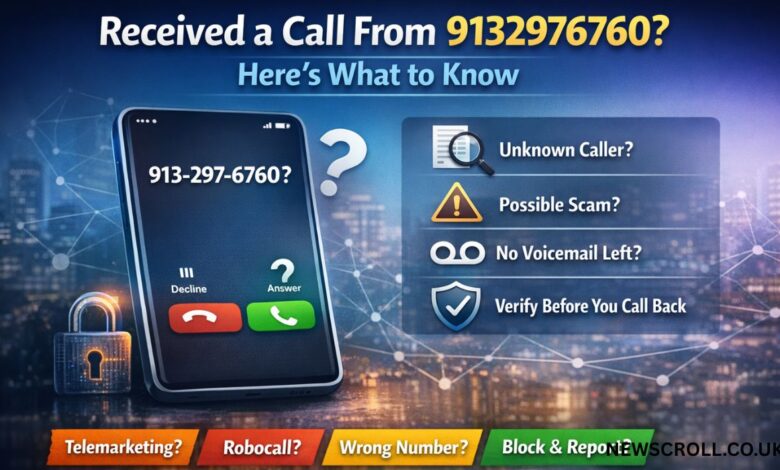
Getting a call from an unknown number can feel small at first, but it often stays in your mind longer than expected. You may wonder whether the call came from a real business, a wrong number, a robocall, or someone trying to get your attention for the wrong reasons. That is why many people search unfamiliar numbers before they answer, call back, or block them.
When the number 9132976760 appears on your screen, the smartest first step is to stay calm and avoid making quick assumptions. A phone number alone does not always tell the full story. Some unknown calls are harmless, while others are unwanted, misleading, or designed to pressure people into acting too fast.
This guide gives you a clear and simple way to understand what this call may mean. It explains the most likely reasons behind the contact, the warning signs to watch, and the safest steps to take next. Instead of guessing, you can use a careful process that protects your privacy, time, and peace of mind.
Quick Information Table
| Detail | Information |
|---|---|
| Number | 9132976760 |
| Type | Unknown caller |
| Possible source | Robocall, telemarketing, wrong number, unverified business call |
| Risk level | Unknown until verified |
| Safe response | Let it go to voicemail |
| Best next step | Verify before calling back |
| Recommended action | Block or report if suspicious |
What Kind of Number Is 9132976760?
A number like this is best treated as an unverified caller until you have a clear reason to trust it. Many people hope that the digits themselves will reveal whether the call is safe, but that is not how modern phone activity works. A normal-looking number can still be connected to unwanted or misleading calls.
In today’s phone system, caller ID is not always enough to prove who is on the other side. Some calls are made through automated systems, call centers, internet-based dialing tools, or spoofed numbers that are designed to look ordinary. Because of that, you should focus less on the number’s appearance and more on the caller’s behavior.
This is why unknown number lookup has become such a common habit. People are not only asking who called them. They are also asking whether the call deserves attention, whether it is safe to return, and whether it should be blocked before it becomes a bigger problem.
The number 9132976760 should be viewed as a contact point, not a confirmed identity. Until the caller leaves a real message or provides details you can verify through trusted sources, it is wiser to keep your distance and treat the call carefully.
Why People Search Unknown Numbers Like This
Most people search unknown numbers because they want a quick answer before they take action. They are trying to decide whether to answer the next call, return the missed call, or ignore it completely. That decision feels important because phone calls still carry a sense of urgency.
A missed call can trigger many questions. It could be related to work, a package, a service provider, a bank, or a healthcare office. At the same time, it could also be a telemarketing call, a robocall, or a scam attempt. That mix of possibilities is what makes unknown calls so frustrating.
People also search numbers because scams have become more convincing over time. Some callers sound calm, polite, and professional. They may mention a payment issue, account notice, verification step, or urgent update. Even careful people can feel unsure when the caller sounds believable.
Searching a number helps people slow down and think clearly. Instead of reacting in the moment, they step back and look for signs, patterns, and safe next steps. That pause often makes the difference between a smart response and an avoidable mistake.
Common Reasons 9132976760 Might Be Calling
One common reason behind an unknown call is telemarketing. A company may be trying to promote a service, offer a deal, or follow up after a form submission. These calls are not always dangerous, but they are often unwanted, especially when the person receiving the call did not request contact.
Another possible reason is an automated robocall. These systems are used for sales outreach, reminders, surveys, and mass calling campaigns. In many cases, the call may begin with silence, a short delay, or a recorded voice instead of a real person speaking right away.
There is also the chance that the call is simply a wrong number. This happens more often than people think. Someone may have typed the wrong digits, selected the wrong contact, or used an outdated number from an old record. A wrong number is harmless, but repeated calls without explanation can still become annoying.
A more serious possibility is that the number is part of a spam or fraud attempt. Some callers use pressure, fake urgency, or vague threats to make people share private details or send money. That is why it is smart to treat any unfamiliar number carefully until the reason for the call is fully clear.
Signs the Call May Be Suspicious
One of the clearest warning signs is pressure. If the caller wants you to act immediately, pay right away, confirm sensitive details, or respond before you think, that is a major red flag. Legitimate callers usually explain the issue clearly and allow you time to verify information.
Another warning sign is a vague identity. If the caller avoids giving a company name, department, or direct reason for calling, trust should drop quickly. A real business or service provider should be able to explain who they are and why they are contacting you in plain language.
Repeated calls with no voicemail can also feel suspicious. Many spam systems call more than once to get your attention, but they leave little or no useful information. When a number keeps appearing without any real message, it often means the caller wants a reaction more than a conversation.
Silence, robotic speech, or strange call behavior should also make you cautious. If there is a long pause before someone speaks, if the call ends quickly after you answer, or if the voice sounds heavily scripted, it may be part of an automated dialing system rather than a normal one-to-one call.
What to Do If You Answered the Call
If you answered the phone, the most important thing is to remember what you shared. If you only said hello and ended the call, the risk is usually low. The main concern starts when private information, account details, passcodes, or payment data enter the conversation.
If the caller asked personal questions, pause and review the situation carefully. Think about whether you gave your full name, address, date of birth, bank details, card information, login details, or a one-time verification code. The more sensitive the information, the faster you should act to protect yourself.
A smart next step is to secure anything connected to what you shared. That may include changing passwords, reviewing account activity, contacting your bank, or checking with the official company the caller claimed to represent. Use only trusted contact methods that you find yourself.
It also helps to write down a few details from the call. Note the time, the tone, the claim made by the caller, and anything they asked you to do. These notes can help if you decide to block the number, report the call, or review account activity later.
What to Do If You Missed the Call
If you missed the call, you are already in a better position because you were not forced to respond in the moment. Letting an unknown call go unanswered gives you time to think clearly. It also gives the caller a chance to leave a voicemail if the reason is real and important.
A proper voicemail often says a lot about whether the caller should be trusted. A legitimate caller usually leaves a name, purpose, and a clear reason for the contact. A weak voicemail, silent voicemail, or no message at all often suggests the call may not be worth returning.
Before calling back, ask yourself whether you were expecting contact from anyone. If there is no connection to a recent order, service, appointment, application, or customer support issue, there may be no reason to return the call. Curiosity alone is not a strong enough reason to engage.
Missing a call from 9132976760 does not mean you need to respond right away. In many cases, the safest move is to wait, verify, and act only if the caller provides enough information to prove the call is legitimate.
How to Verify the Caller Safely
Verification is the step that protects you from guesswork. If a caller claims to represent a company, service, school, bank, or agency, do not rely only on what they say over the phone. Ask for basic details, then end the call and check independently.
The safest method is to contact the company through its official website, official app, or a trusted number you already know. This gives you a clean path to the real organization without depending on information provided by the unknown caller. It removes pressure and replaces it with proof.
A trustworthy caller should not object if you say you want to verify first. In fact, real businesses usually understand why people are careful with phone scams and spoofed calls. If the caller becomes rude, pushy, or defensive when you mention verification, that alone tells you a lot.
Safe verification also helps you manage emotions. Unknown calls often work by creating fear or urgency. Once you step away from the call and check through official channels, you gain control again. That small pause can protect both your money and your personal details.
Should You Call 9132976760 Back?
Calling back may seem like the fastest way to get clarity, but it is not always the safest option. If the caller left no voicemail and offered no reason for the contact, calling back can create unnecessary risk. It may also confirm that your number is active and closely watched.
A callback makes more sense only when there is a clear message tied to something you recognize. For example, if you were expecting a call about a delivery, an appointment, or a business request, you may have a reason to investigate further. Even then, verification should come first.
It is better to check whether the reason for the call can be confirmed through another route. You may be able to log into your account, review recent activity, or contact the company directly instead of returning the unknown call itself. That keeps you in a safer position.
In most situations, there is no harm in waiting before you respond. A real caller with an important reason usually reaches out again or leaves enough detail to help you make an informed decision. A suspicious caller often depends on urgency and reaction, not patience.
How to Block and Report the Number
Blocking the number is a simple and useful step if the call feels suspicious, repeated, or unwanted. Most smartphones let you block a number directly from the recent call list. This can reduce future contact from the same source and make your phone feel less disruptive.
Reporting the number is also helpful, especially if the call involved threats, fake urgency, payment demands, or requests for private information. Reports help phone systems and spam detection tools improve over time. Even one report can add value when combined with others.
Many phones now include built-in options such as spam filtering, silence unknown callers, or screen call features. These tools are not perfect, but they reduce noise and give you more control over who reaches you. Small settings changes can make a big difference.
Blocking and reporting are not signs of overreacting. They are practical responses to an environment where many calls are unverified and many callers do not deserve direct access to your attention. Protecting your phone space is a reasonable habit, not an extreme one.
How to Protect Yourself From Similar Calls in the Future
The best defense against unknown calls is a simple routine. Let unfamiliar numbers go to voicemail, review messages before calling back, and never share private details just because someone sounds confident on the phone. These habits help reduce both stress and risk.
It also helps to be selective about where you share your phone number. Sign-up forms, contest pages, low-trust websites, and promotional offers often lead to more unwanted contact later. Once a number enters marketing lists or data-sharing systems, spam calls can increase.
Call screening features, spam filters, and device settings can add another layer of protection. Even if they do not stop every unwanted call, they reduce the number of interruptions and help separate important contacts from random outreach. That gives you more control every day.
Most of all, remember that a ringing phone does not automatically deserve an answer. You are allowed to pause, verify, ignore, or block when something feels off. That mindset helps you respond from a place of confidence instead of pressure.
Final Thoughts
A call from 9132976760 may be harmless, promotional, accidental, or suspicious, but the number alone does not prove which one it is. The safest approach is to treat it as unverified until the caller gives a clear reason and you confirm that reason through trusted sources.
Unknown calls are common, but they do not have to control your attention or your decisions. When you stay calm, review the signs, and verify before responding, you make it much harder for unwanted callers to pressure or mislead you. That is the smartest way to handle any unfamiliar number.
If this number appeared on your phone, do not panic and do not rush. Let facts guide your next step. A careful response protects your privacy, saves your time, and helps you stay in control of your digital life.
Frequently Asked Questions (FAQs)
1. Is 9132976760 a scam number?
It may be a spam, robocall, or ordinary unknown caller, but the number alone does not confirm fraud. The safest choice is to treat it as unverified until you can confirm the caller through a trusted source.
2. Should I answer a call from this number?
You can let the call go to voicemail first and see whether the caller explains who they are. That gives you time to verify the reason for the call without reacting under pressure.
3. Is it safe to call 9132976760 back?
Calling back is not the best first move unless there is a clear voicemail tied to a real purpose. It is usually safer to verify the caller through an official business website or trusted contact method.
4. What if I answered and shared some information?
Review exactly what you shared and secure any account linked to that information right away. If money, card details, or login data were involved, contact the official provider as soon as possible.
5. Why do unknown numbers hang up without leaving a voicemail?
That often happens with robocalls, auto-dialers, or systems testing active phone numbers. A repeated call with no real message is often a sign that the number does not deserve a response.